What Verification Timelines Reveal About Success Rates in High-Volume Retail Payment Setups
Felix Schmid · Oct 11, 2026
What Verification Timelines Reveal About Success Rates in High-Volume Retail Payment Setups
Verification timelines in high-volume retail payment setups show clear patterns that connect directly to approval rates, because faster checks reduce cart abandonment while extended processes increase the chance of declines from issuers or network timeouts, and these dynamics play out consistently across large-scale operations.
Core Elements of Payment Verification
Payment verification in retail environments includes address verification service checks, card verification values, and three-domain secure protocols that authenticate cardholders before funds move, yet the time each step consumes varies based on network load and merchant volume, so operators track these intervals to spot where friction builds up.
High-volume setups process thousands of transactions per minute during peak periods, which means even small delays in verification compound quickly and affect overall success metrics, according to Federal Reserve payments systems reports.
Timeline Patterns and Approval Correlations
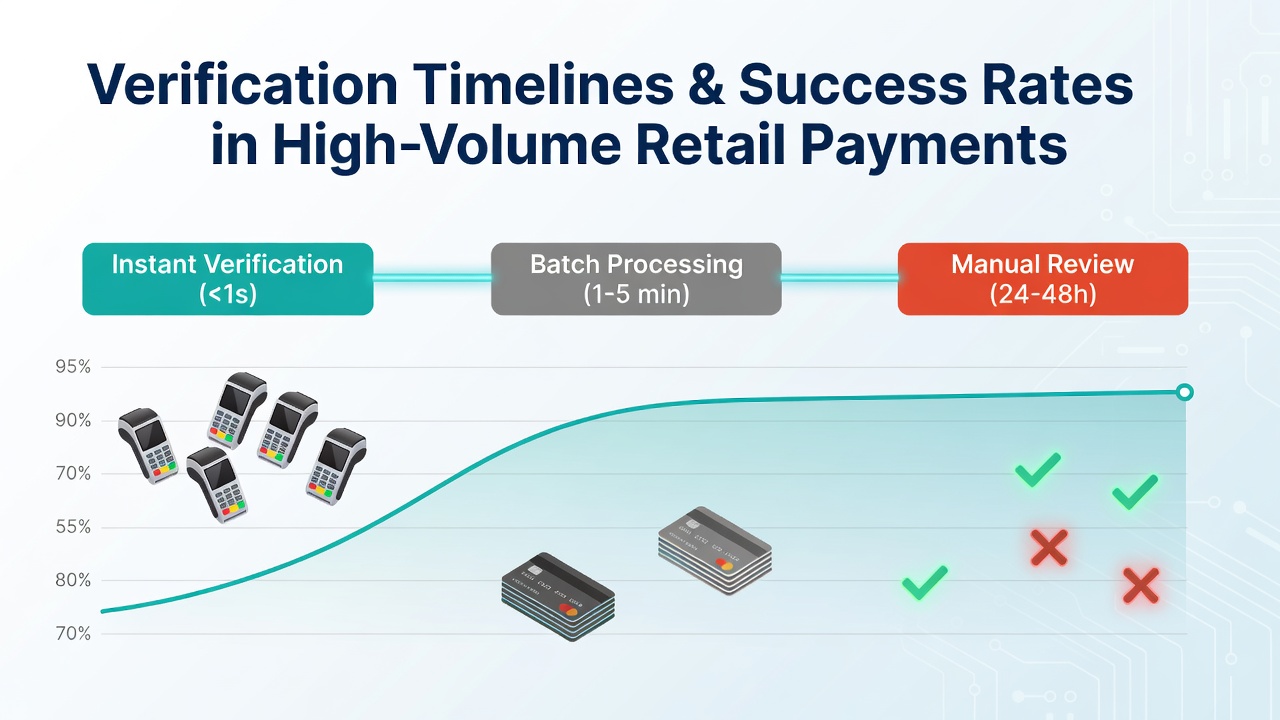
Data from transaction logs reveals that verification completed within two seconds correlates with approval rates above 92 percent in many retail categories, whereas steps stretching beyond five seconds see approvals drop toward 78 percent because issuers flag the delay as potential risk, and this threshold appears repeatedly in aggregated industry figures.
Retailers running high-volume operations often adjust their gateway configurations to prioritize quicker verification paths for repeat customers, which shortens the overall window and lifts success rates without compromising security layers, while new or flagged accounts receive fuller scrutiny that extends timelines but protects against later chargebacks.
Evidence from Recent Analyses
Studies conducted through 2026 highlight how seasonal spikes alter these relationships, because October 2026 saw elevated transaction volumes that pushed average verification times up by 1.8 seconds across monitored networks, and the resulting dip in success rates prompted several chains to reroute traffic through secondary processors with lighter loads.

Researchers tracking multi-location retail networks note that locations with optimized verification routing maintained steadier success rates even during those October surges, since the systems balanced load across verification providers and avoided bottlenecks that hit competitors.
Operational Adjustments That Influence Outcomes
Merchants implement rules-based engines that decide which verification steps activate based on transaction amount, customer history, and device signals, and these engines compress timelines for low-risk flows while expanding them for others, which produces measurable lifts in batch approval percentages.
Network congestion during high-volume windows forces some processors to queue requests, and observers note that setups with fallback routing to alternative verification services recover faster and sustain higher completion rates than those locked to single paths, because the secondary route bypasses the delay entirely.
Geographic and Scale Variations
European retail operations following European Central Bank guidelines on strong customer authentication report slightly longer average verification timelines than comparable North American setups, yet the success rate differentials remain comparable once volume thresholds are reached, since the added authentication steps offset some speed advantages.
Larger chains that aggregate data across regions identify that verification delays compound more sharply in cross-border flows, where currency conversion checks layer onto standard protocols and extend the window by up to three seconds on average, leading to targeted investments in localized verification nodes that bring those intervals back in line with domestic benchmarks.
Conclusion
Verification timelines serve as reliable indicators of success rates in high-volume retail payment setups because they expose friction points that directly influence whether transactions clear on the first attempt, and operators who monitor and shorten these intervals through routing adjustments and selective step activation consistently record stronger approval metrics across their networks.